A virtual/embodied collective space-time lament / celebration desire vulnerability brutality emptiness The subtle emergence of our shared turbulent ecologies
Our Lemon Grove explores how human and non-human agents can co-compose meaning within hybrid media environments. Drawing from Pina Bausch’s choreographic language—marked by vulnerability, brutality, and emptiness—the work uses a living video archive and the biochemical transformation of lemons to drive an evolving audiovisual system. As the lemons’ acidity changes, a simple AI model trained on performance material edits and recomposes video fragments in real time.
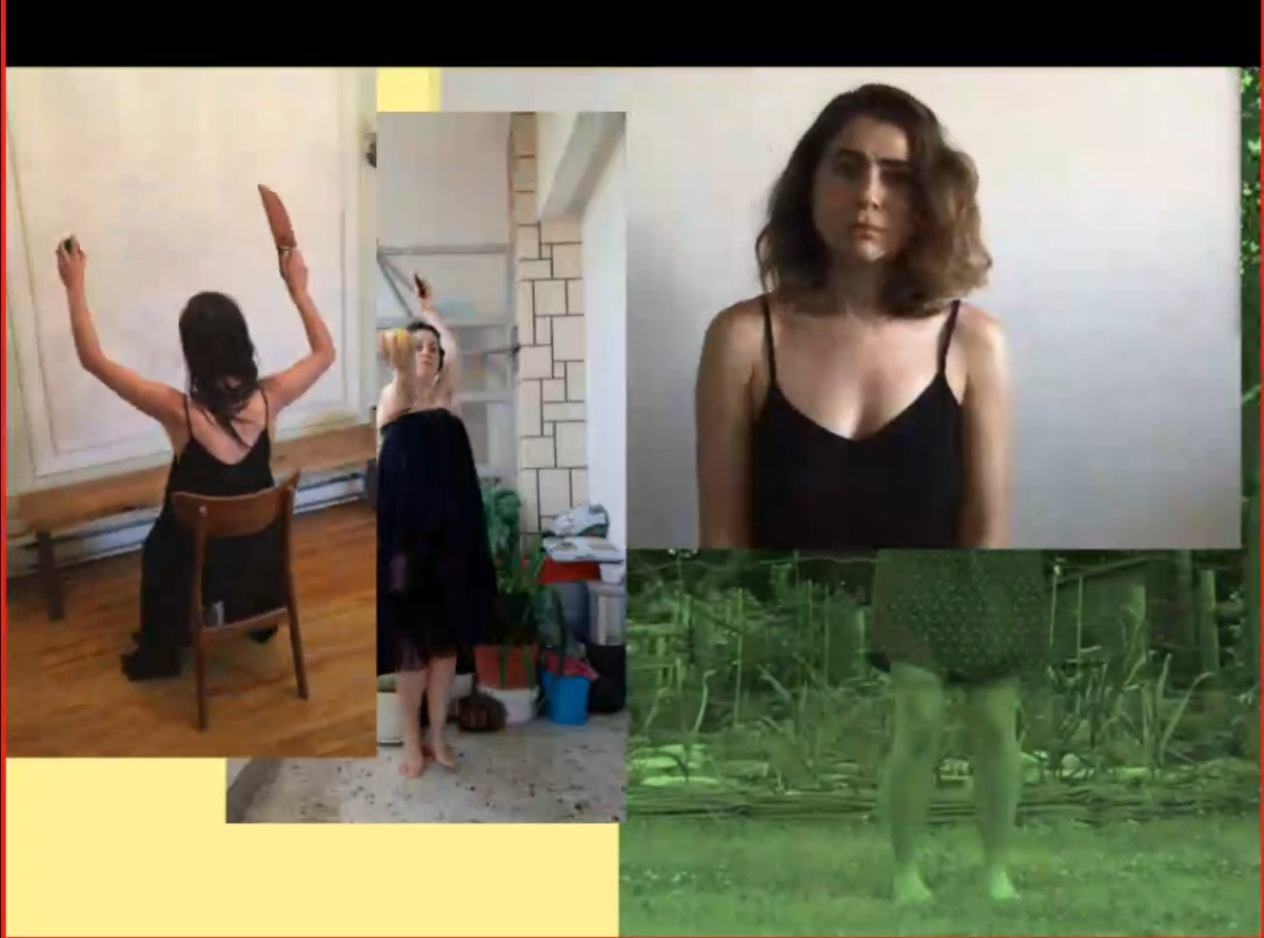
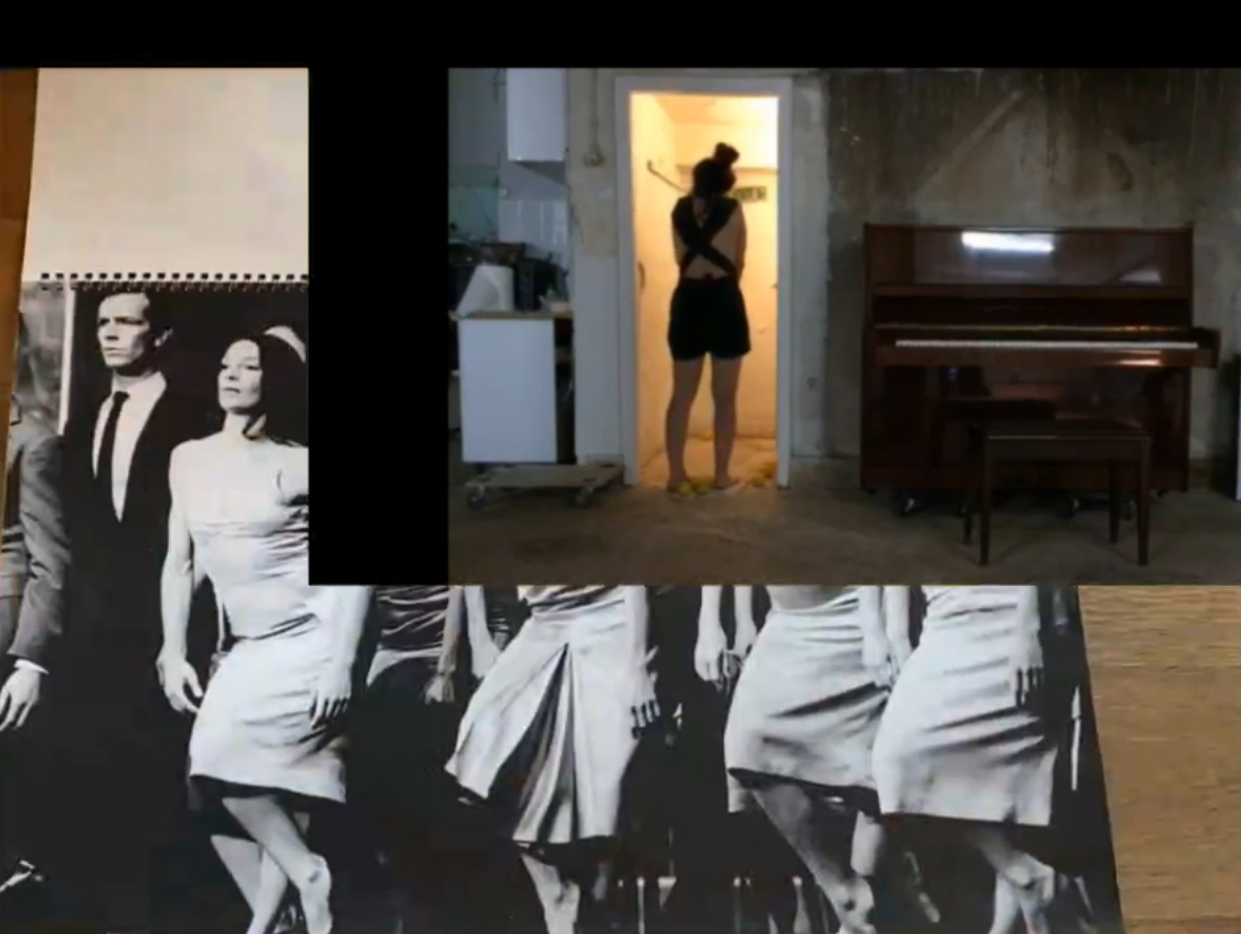
The project builds on Can You Taste It? (2020), a hybrid Zoom performance initiated by Erato Tzavara during lockdown. In that piece, an international group of female artists responded to a movement score from Bausch’s Vollmond, contributing videos that were recomposed live. This experiment grew out of shared support networks that emerged online, where screens became both performative and spiritual spaces, subtly shaping collective consciousness.
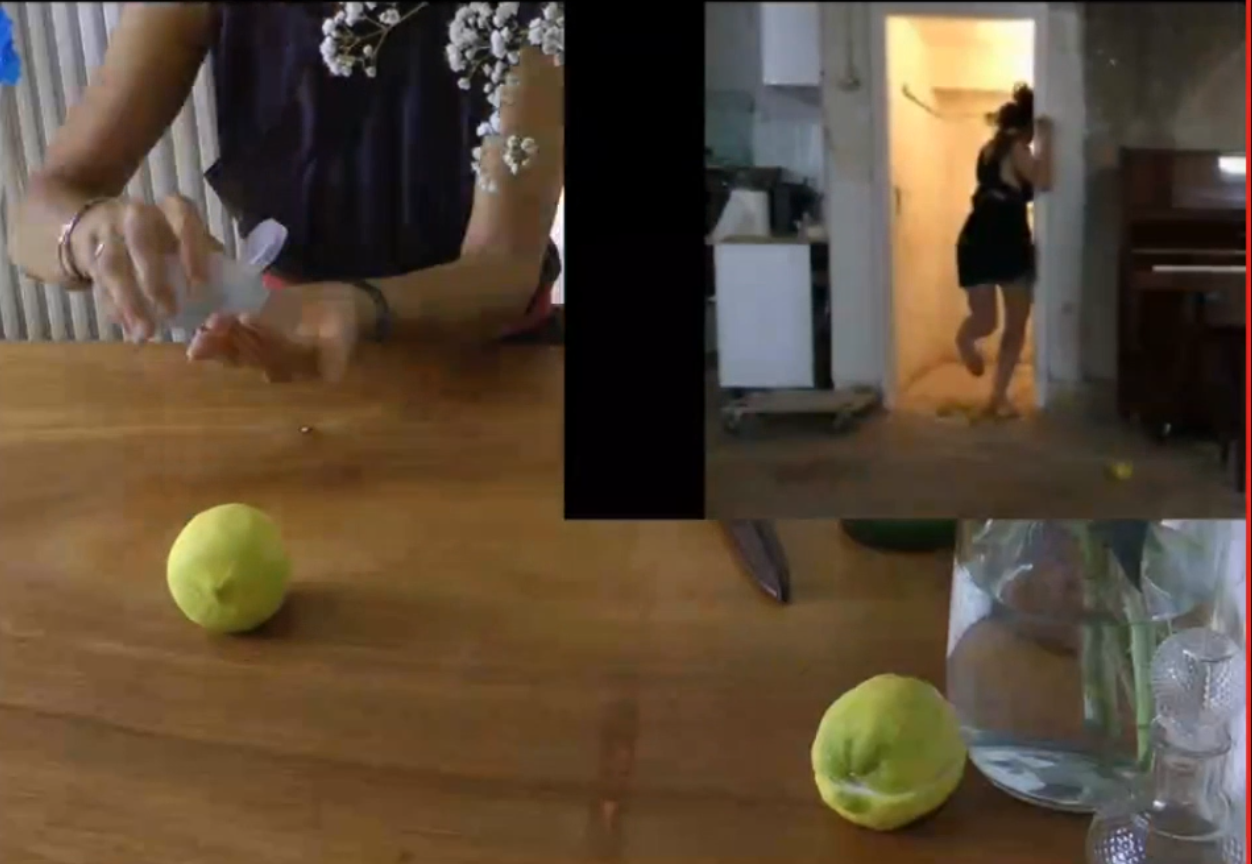
June 2020 – “Can you taste it?” Hybrid Zoom performance was presented as Part of DAI Kitchen presentations at Athens Aparamillon and via Zoom) Concept – live video compositing – technical setup – facilitation: Erato Tzavara Live performance: Erato Tzavara, Georgia Aliferi
Text by: Erato Tzavara, Georgia Aliferi, Saskia Fischer
With original video creations by: Alexandra Duvekot, Ilgin Deniz Akseloğlu, Saskia Fischer, Ioanna Manoussaki- Adamopoulou, Domna Zafeiropoulou, Vassiliki Nomidou, Grigoria Vryttia, Anastasia McCammon, Lucyanna Moore, Camilla Canocchi, Lisa and Raya de Liema, Lo Bill, Kate Nankervis, Erika Mitsuhashi, Georgia and Stella Stellin, Caterina Genta
Tools used: Resolume Arena, OBS, Zoom, 2 live cameras
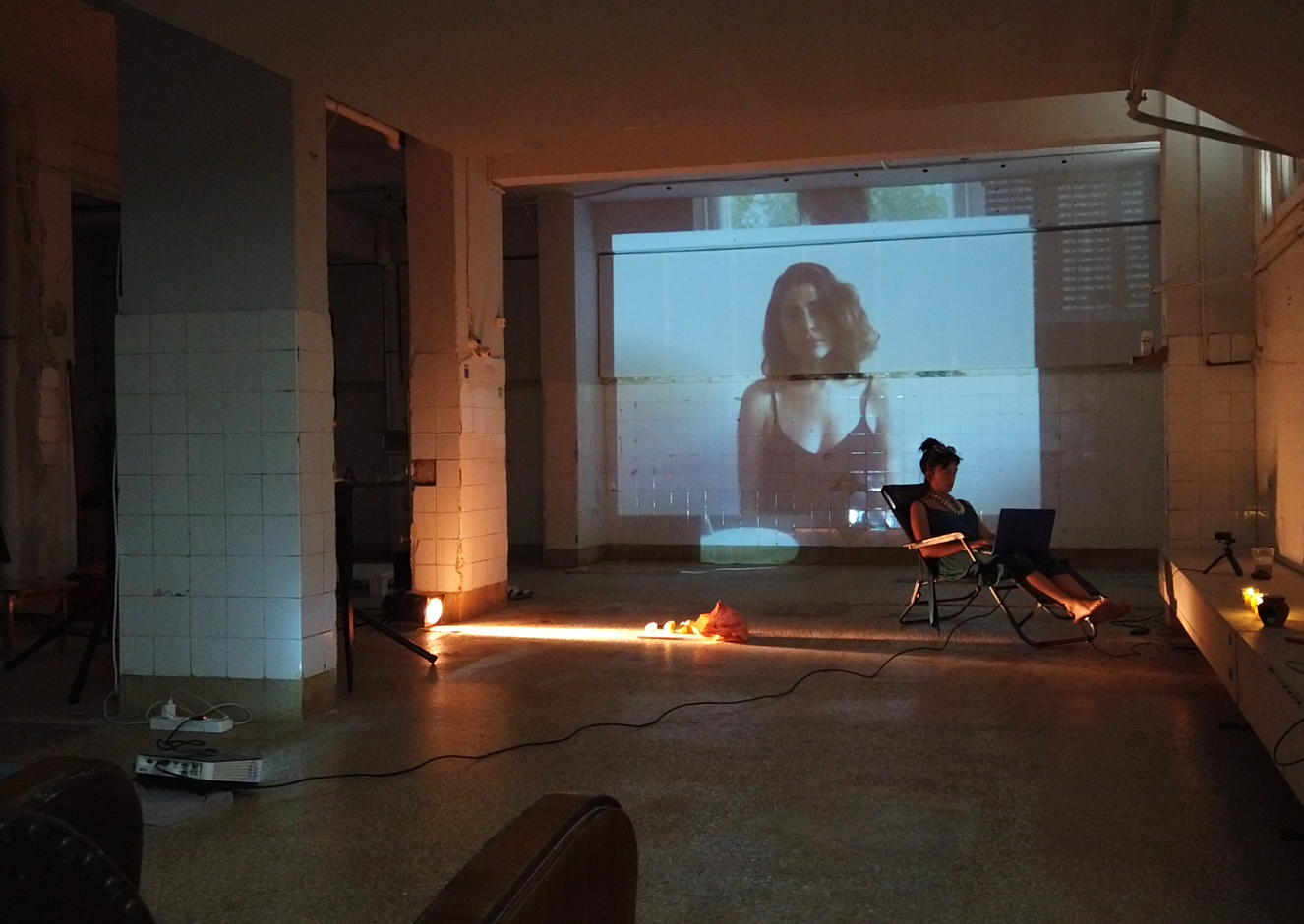
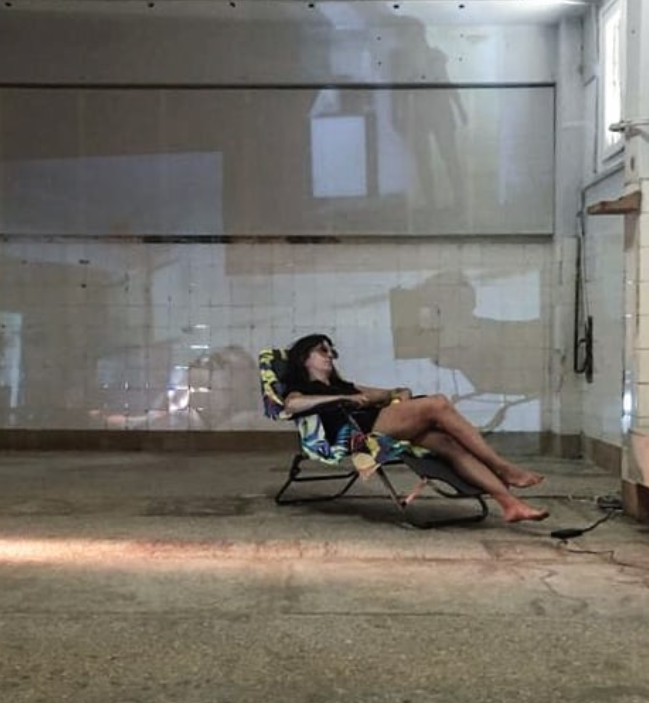
Performance still, Aparamillon, June 2020
The project was initiated with an initial call out for participation with the following score:
“First, I wait and wait and wait and wait and wait and wait and wait and wait and wait and wait and then I wait
and wait, YES, I wait and wait and wait and wait and wait. And then I cry and cry and cry and cry and cry and
cry and cry and cry and cry and cry and cry and then I wait and wait and wait and wait and wait…”
The performance was presented to the DAI online audience, with two respondents providing feedback. Nick Aikens was attending online, whereas Vinita Gatne was watching live (she was the only live audience member of the piece). Below some of their comments on what they experienced.
Nick Aikens “The use of split screen felt “digitally visceral” and reminded us of the condition we are currently in, where we permanently have our attention called in many ways, trying to find meaning, to find rest-place, sensuality. It was a wonderful way to mediate on how we are currently living with this condition.
There was always this recognition of time passing, very poignant for this moment, when the sense of time has gone very strange to us all.
I think this combination of the live edit, playing with intimacy of bodies being together in physical space and the distraction of the screen and the poor connection was beautifully poised. Somehow you managed to produce something formally and technically sophisticated without giving a sense of an elaborate production. You were true to the sentiments of frustration / exhaustion / waiting. “
Vinita Gatne “I was seeing Erato and Georgia, and I was seeing them on the screen as they were reeling, then I was seeing the projection and also their shadows interfering with the projection. I could not differentiate between what is present and what is not present, despite of physically being there.
The way you put these images together in the space, it gives a sense of dream…it removes the ground off you in an eerie way…it made me think that physical presence can manifest as a dream…Visceral is the correct description of this performance.”
”Contaminated by Pina, we carefully repeat, amplify, vibrate together with dreams of shaking the habitual”
Our Lemon Grove extends this research through a critical media framework, reimagining the archive as a networked, sympoetic system where human intention, machine agency, and material decay intersect. Integrating real-time sensory data with AI-driven editing, the work engages feminist media practices, affective computing, and network theory to explore distributed authorship and collective expression.
Through an eco-feminist media lens, the project proposes a new model of networked performance. It examines how sensory-material systems, distributed archives, and collective agency can generate speculative spaces of care and resilience—merging Bausch’s choreographic legacy with critical media theory and participatory archival practices.